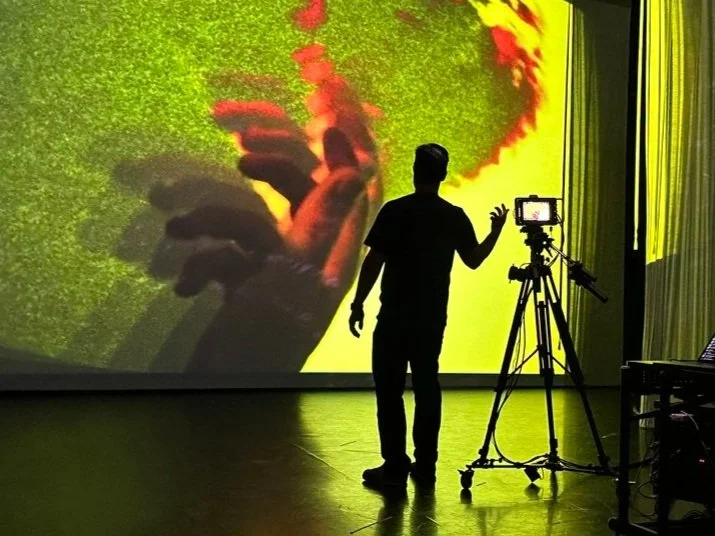
Alex Oliszewski | Interdisciplinary Media Design, Performance, & Technology
Alex Oliszewski is a Full Professor of Media Design for Live Performance and Installation at The Ohio State University, jointly appointed in the Department of Theatre, Film, and Media Arts (TFMA) and the Advanced Computing Center for the Arts and Design (ACCAD), with affiliate faculty status in Dance at The Ohio State University (OSU).
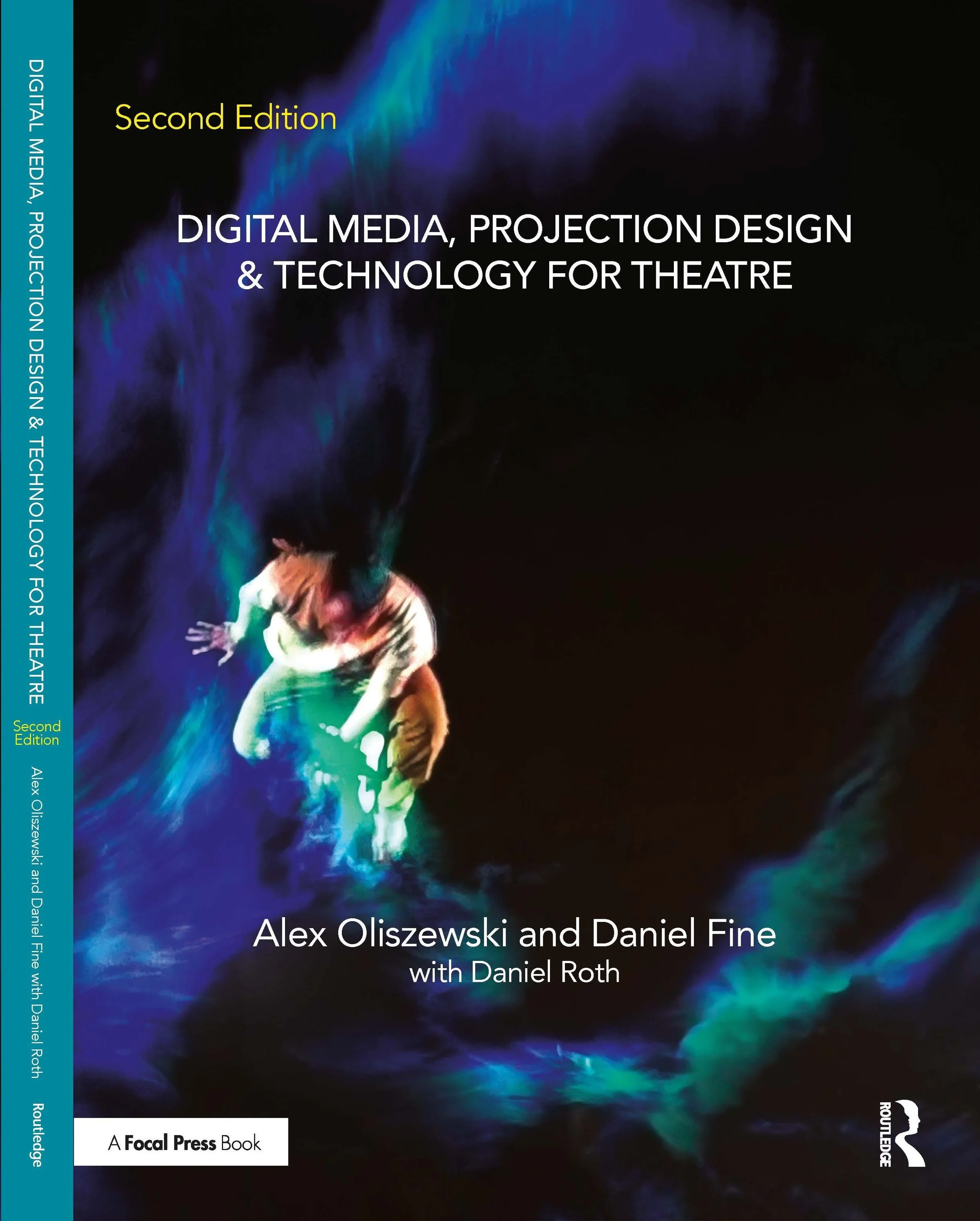
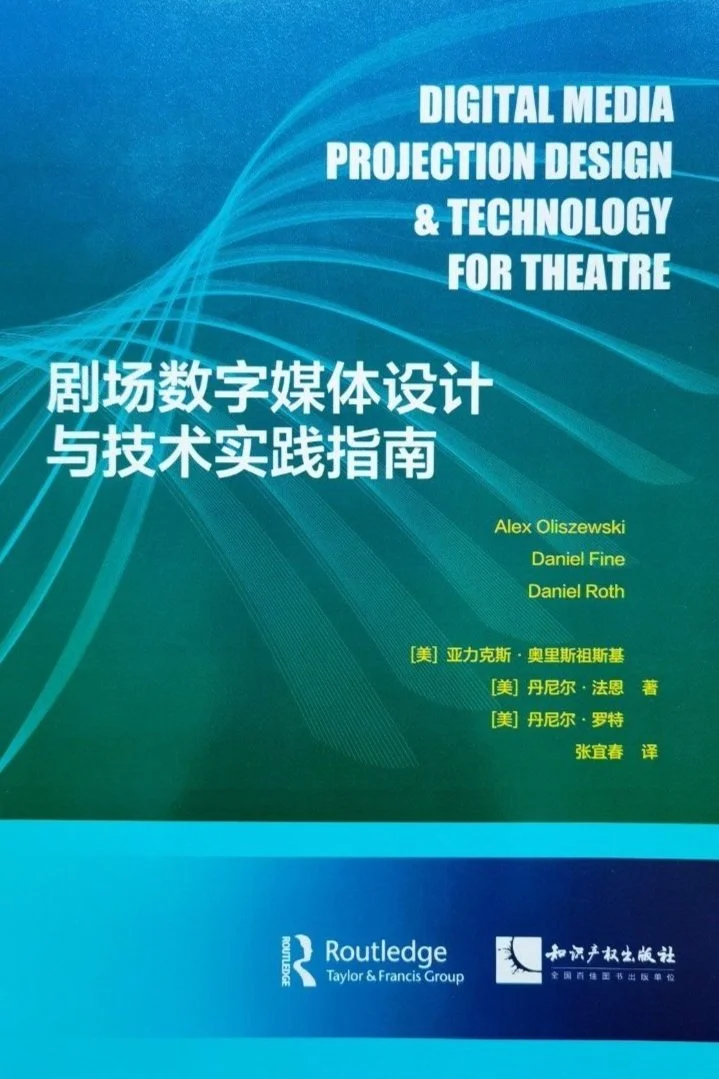
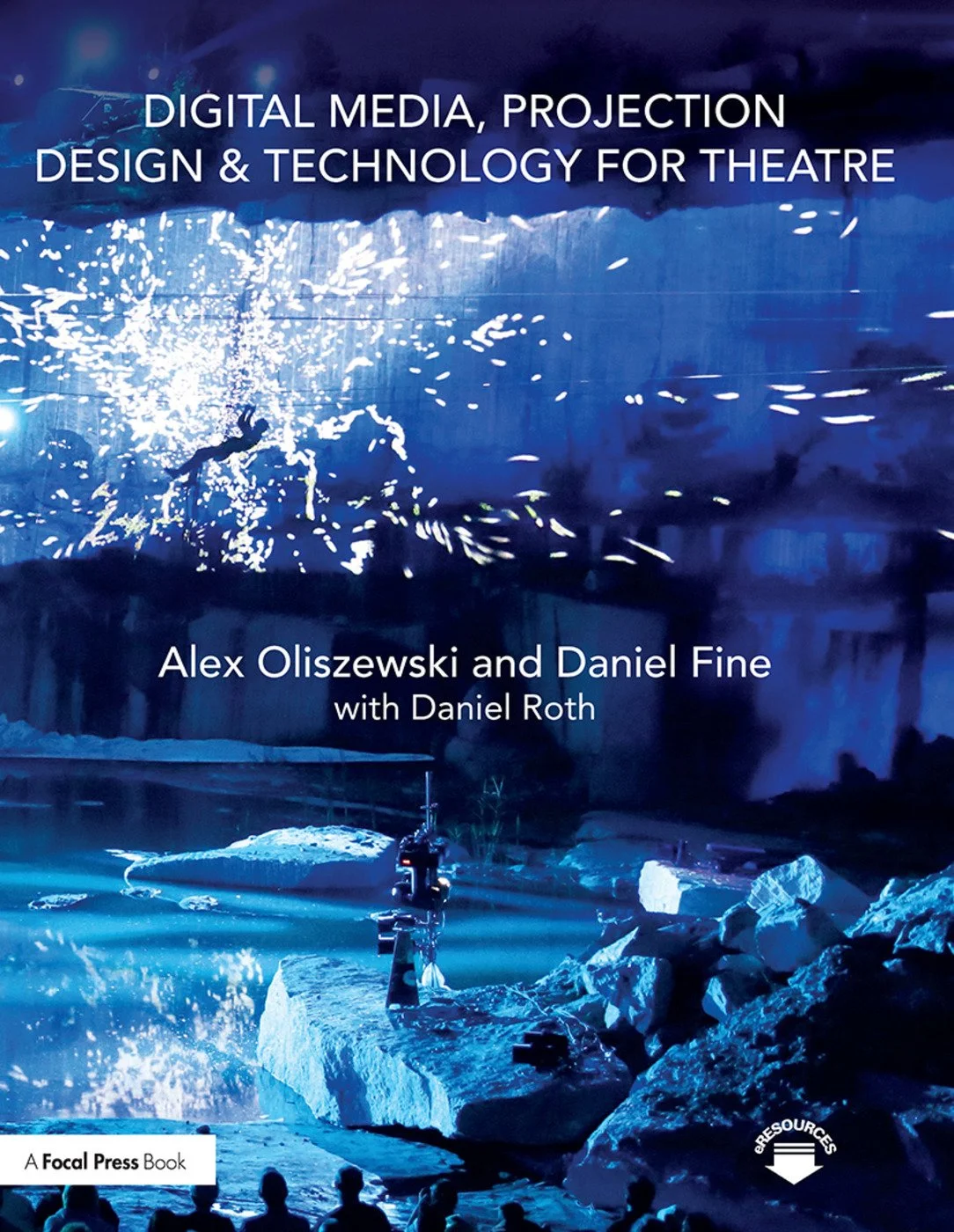
His work blends digital scenography, interactive systems, and immersive media across performance, education, and research. He developed Devising Experiential Media Systems, now a required course in OSU’s Experiential Media Design program, and co-authored Digital Media, Projection Design & Technology for Theatre (2nd ed., 2025), adopted internationally and translated into Chinese through CASTI’s national training initiative.
Alex is Co-PI on VR simulation projects for dementia care and emergency response, backed by over $2.2M in grants. As a media designer, his recent credits include Ride the Cyclone (2024 Jebby Award), Orlando, Silent Sky, and Indecent. His original work The Survivor’s Way—a media-driven exploration of trauma, restorative justice, and embodied memory—will be further developed during a week-long 2026 residency at Fort Lewis College, culminating in a public performance presented in partnership with the Durango Community Concert Hall.
At OSU, he teaches courses in media design, lighting, devising VR narratives, and performance-as-research, and mentors MFA and PhD students across Theatre, Dance, Art, and Design. A founding member of the USITT Digital Media Commission and frequent national and international presenter, Alex is recognized for his leadership in transdisciplinary media practice and creative mentorship across local, national, and global stages.
Book Publications
Theatrical Media Design
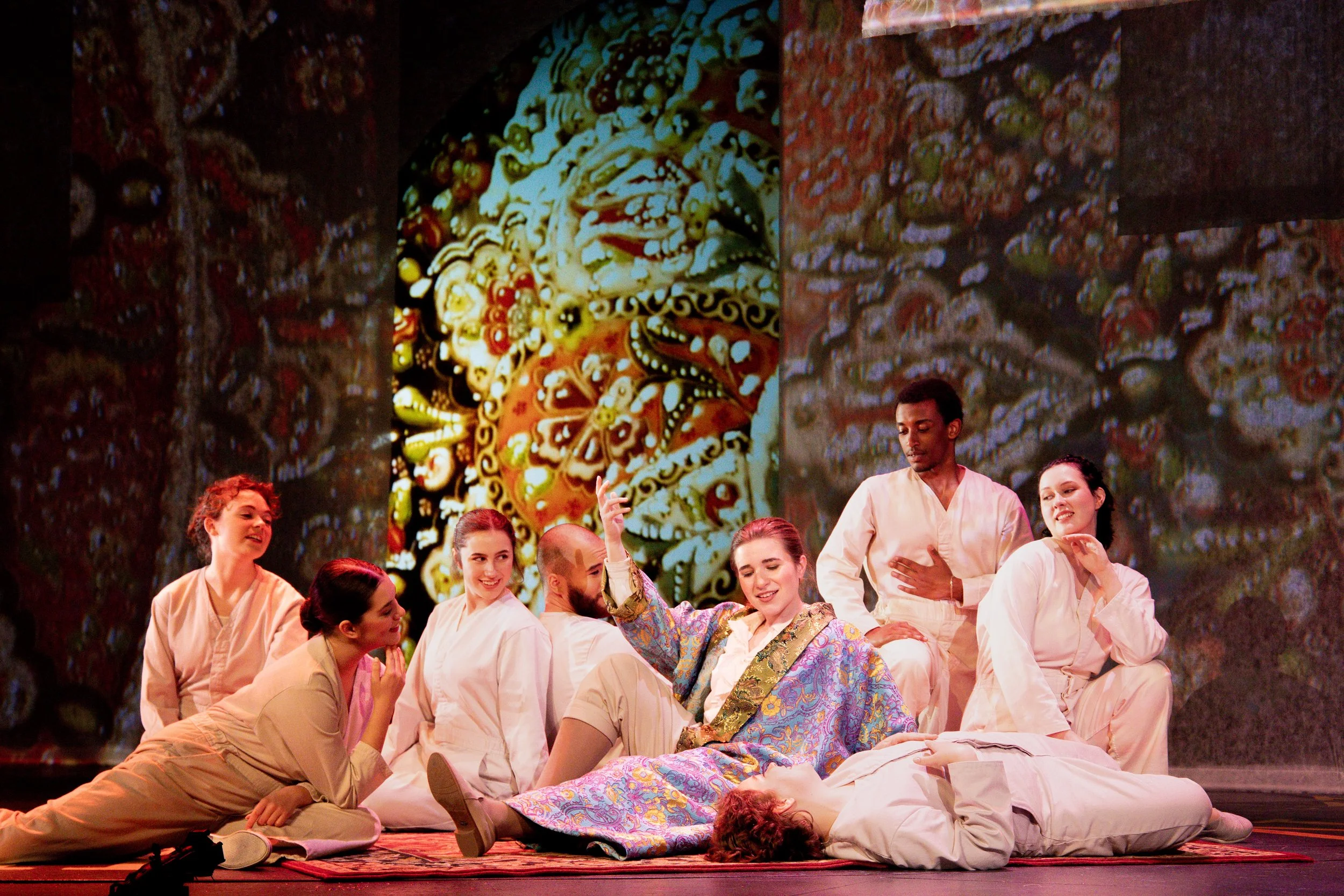
Orlando
OSU, Department of TFMA
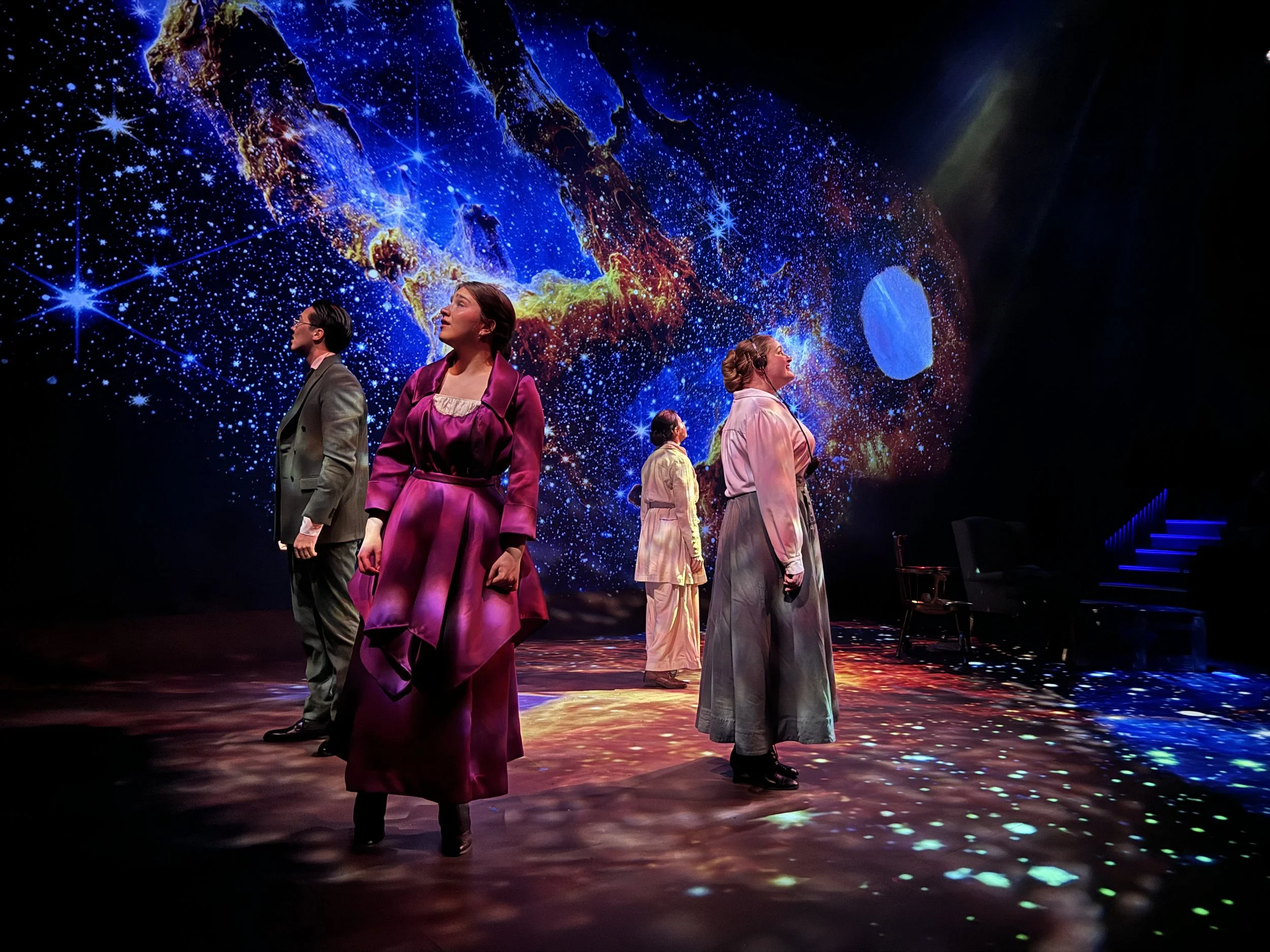
Silent Sky
OSU, Department of TFMA
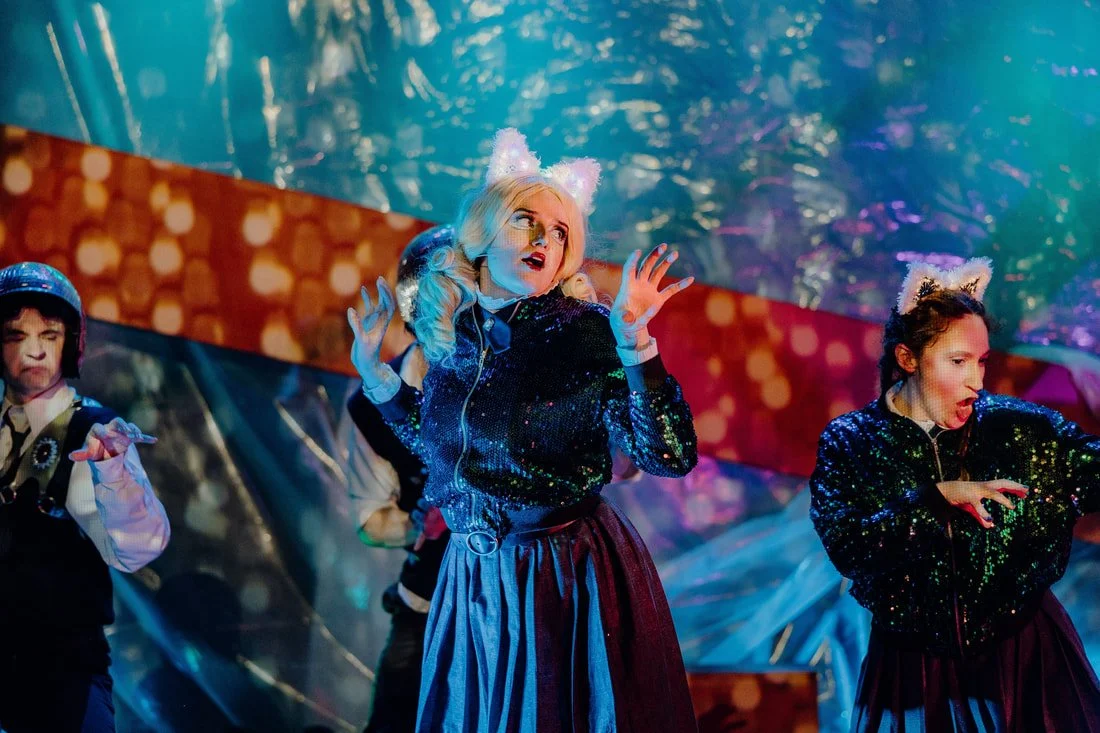
Ride the Cyclone
The Contemporary Theatre of Ohio
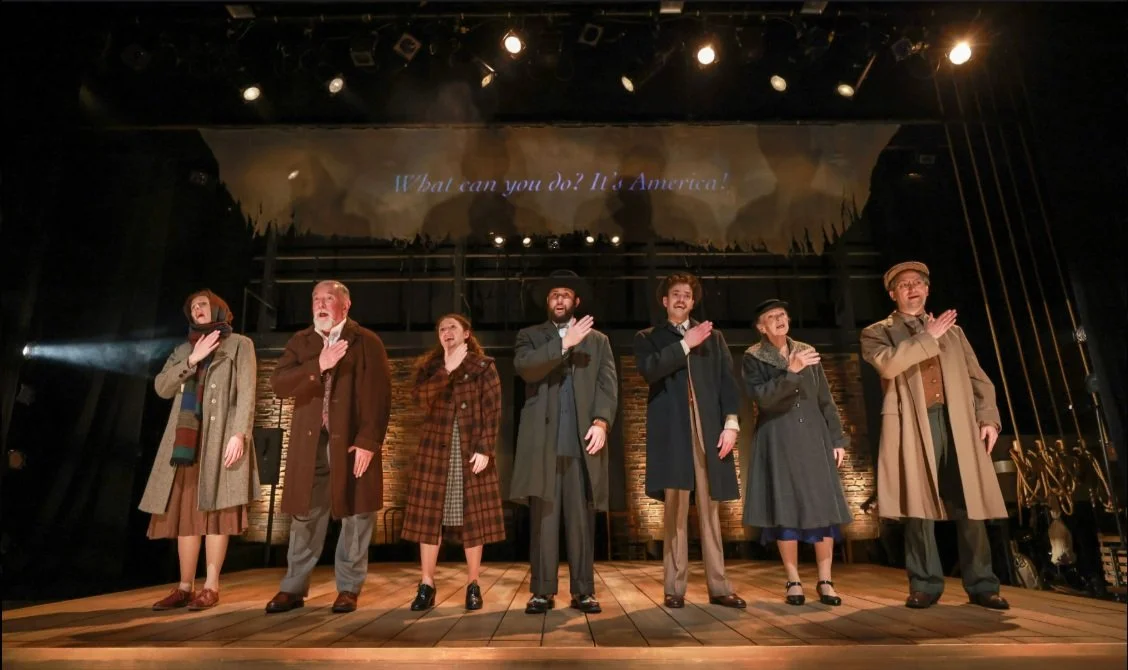
Indecent
The Contemporary Theatre of Ohio
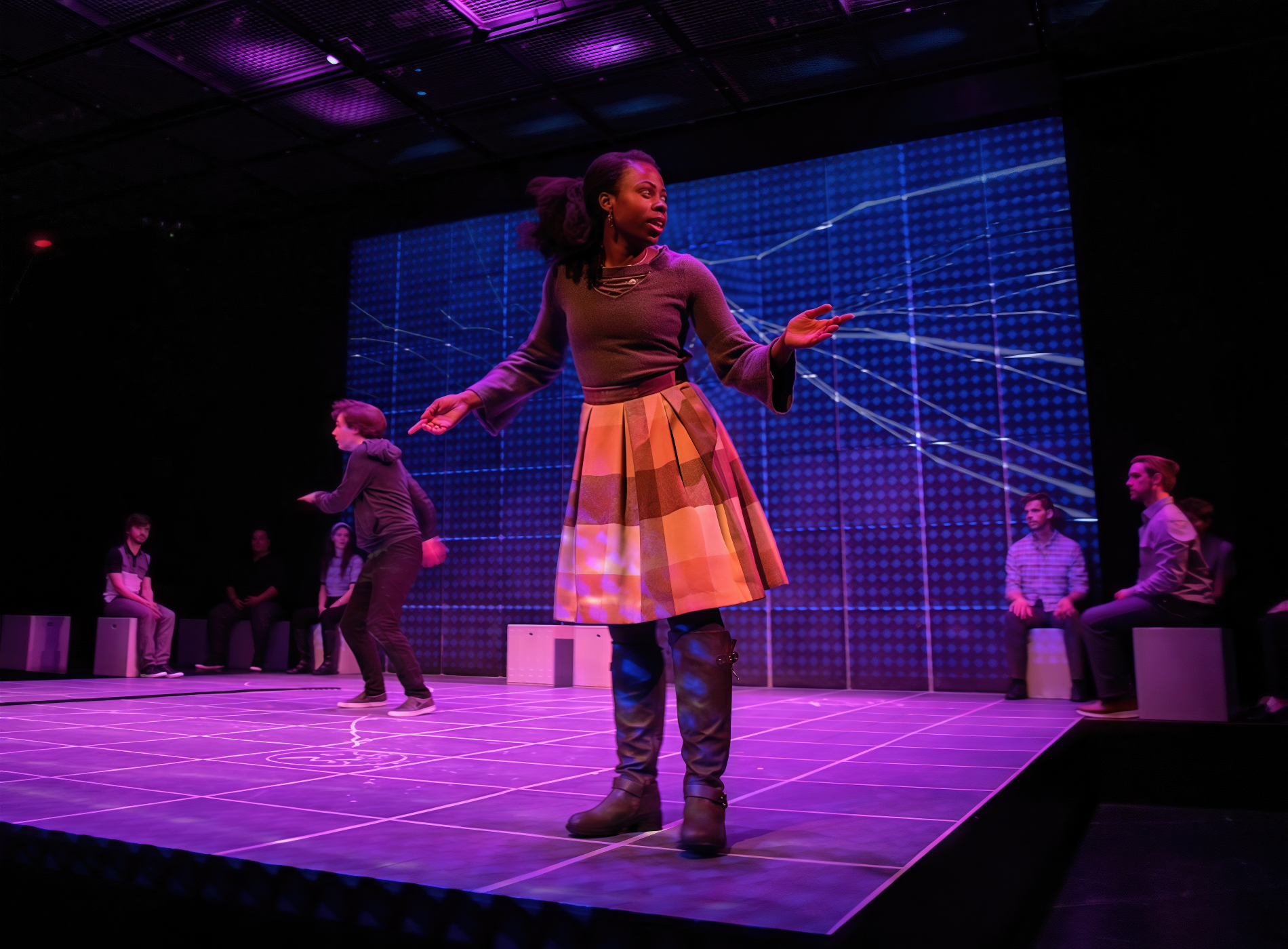
The Curious Incident of the Dog in the Night Time
OSU, Department of TFMA
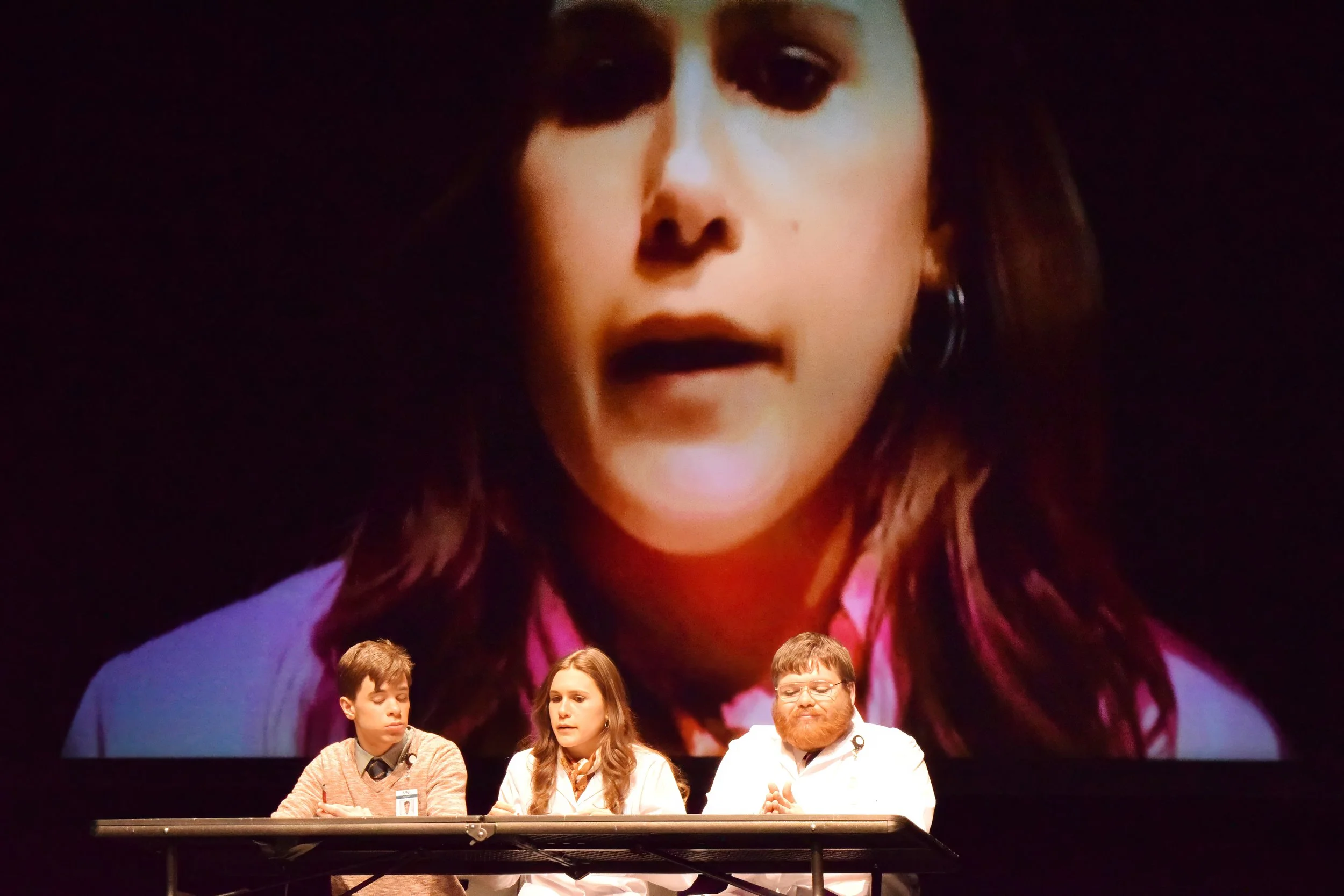
Execution of Justice
OSU, Department of TFMA
Research & Media Design
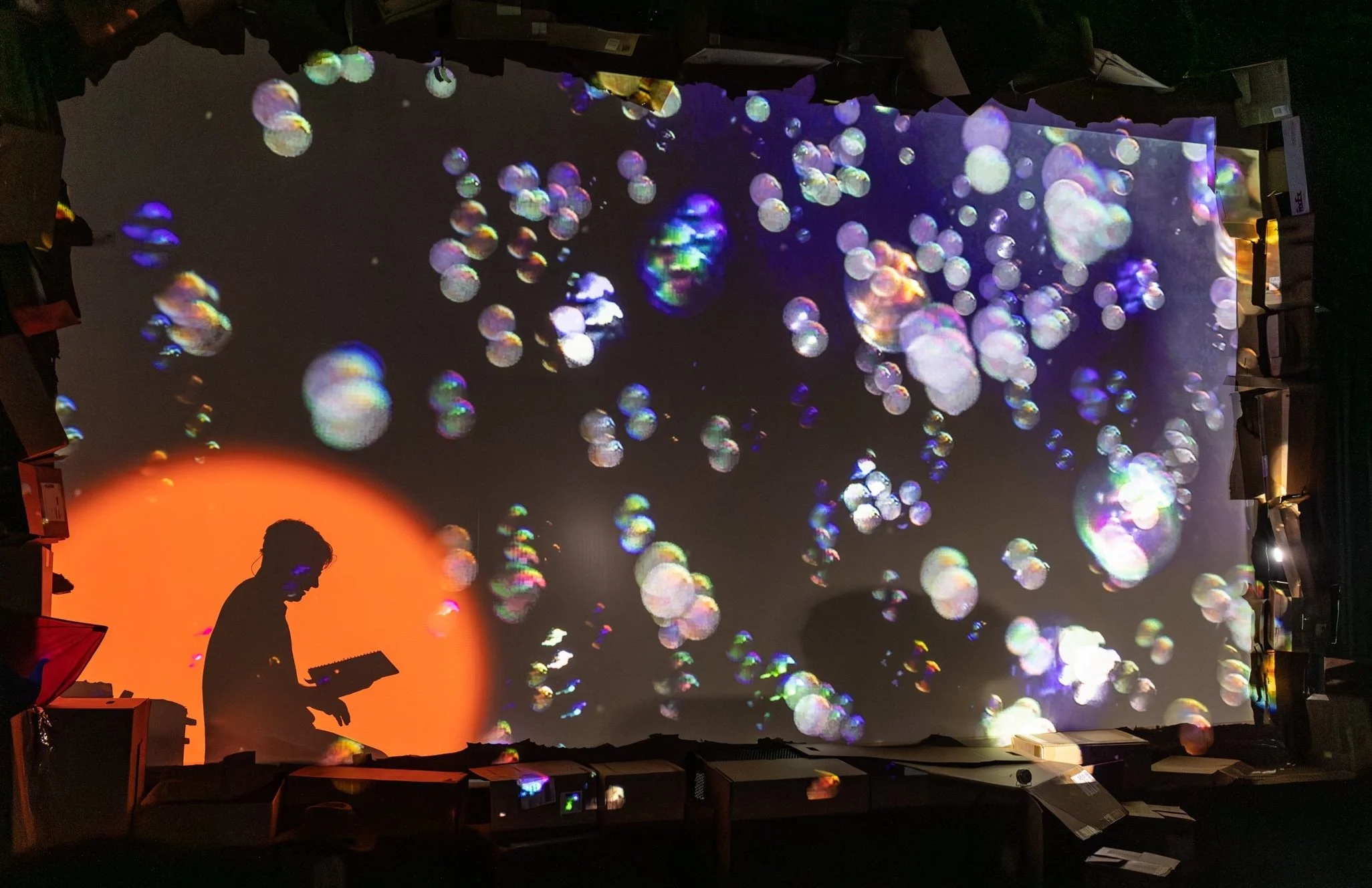
The Survivor’s Way
Multiple Locations
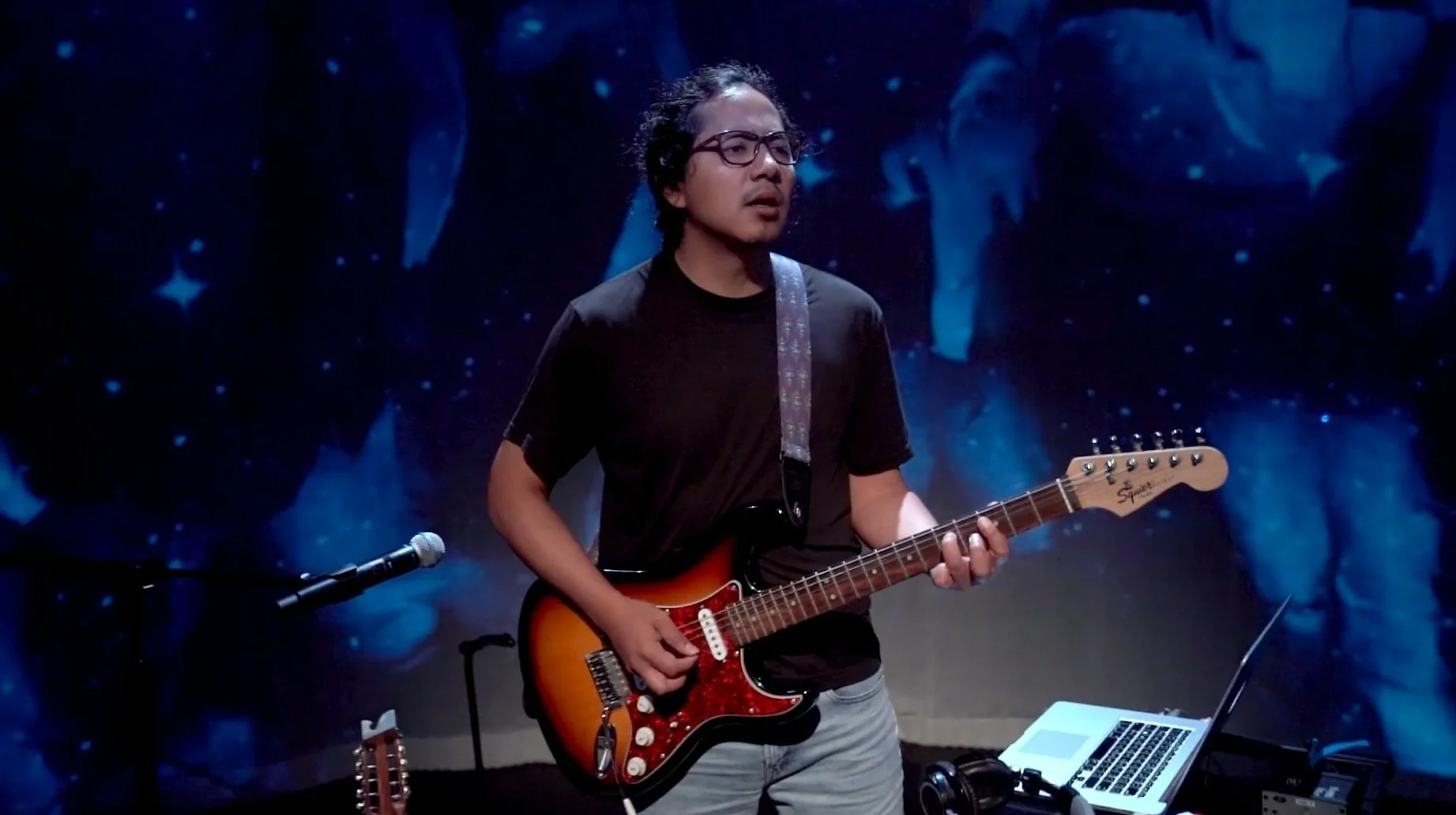
YANA
OSU, ACCAD
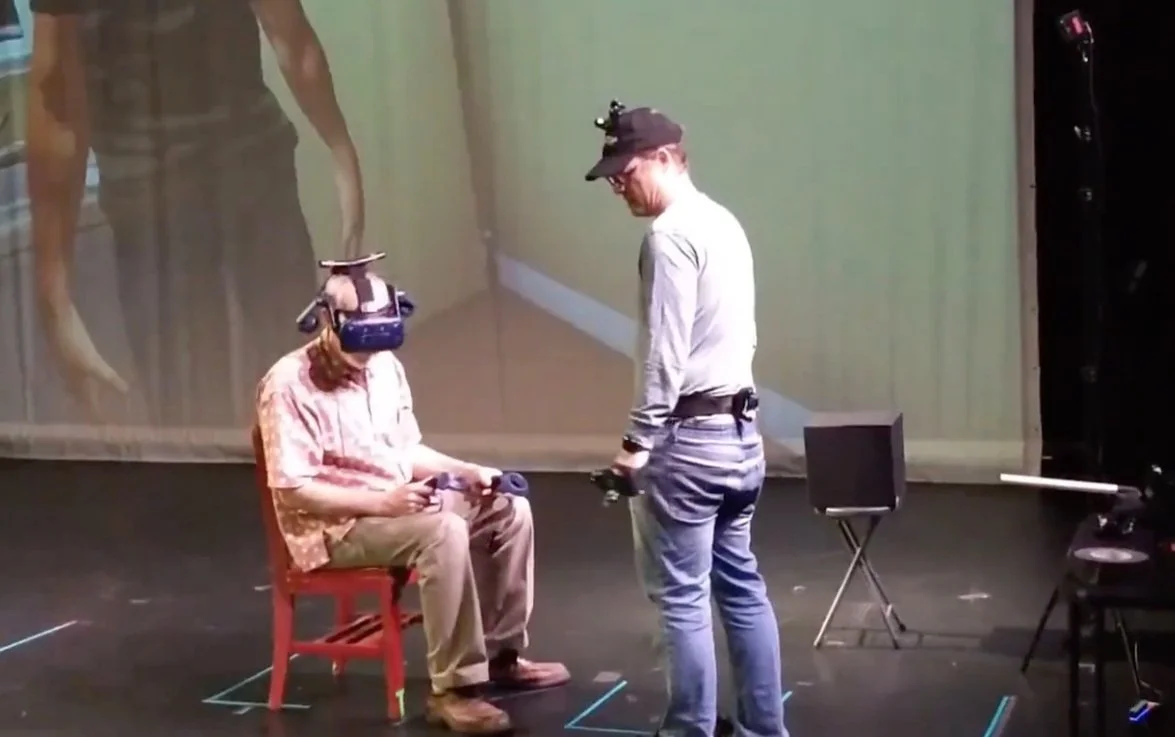
Perspective Taking in VR: The Dementia Care Project
OSU, ACCAD
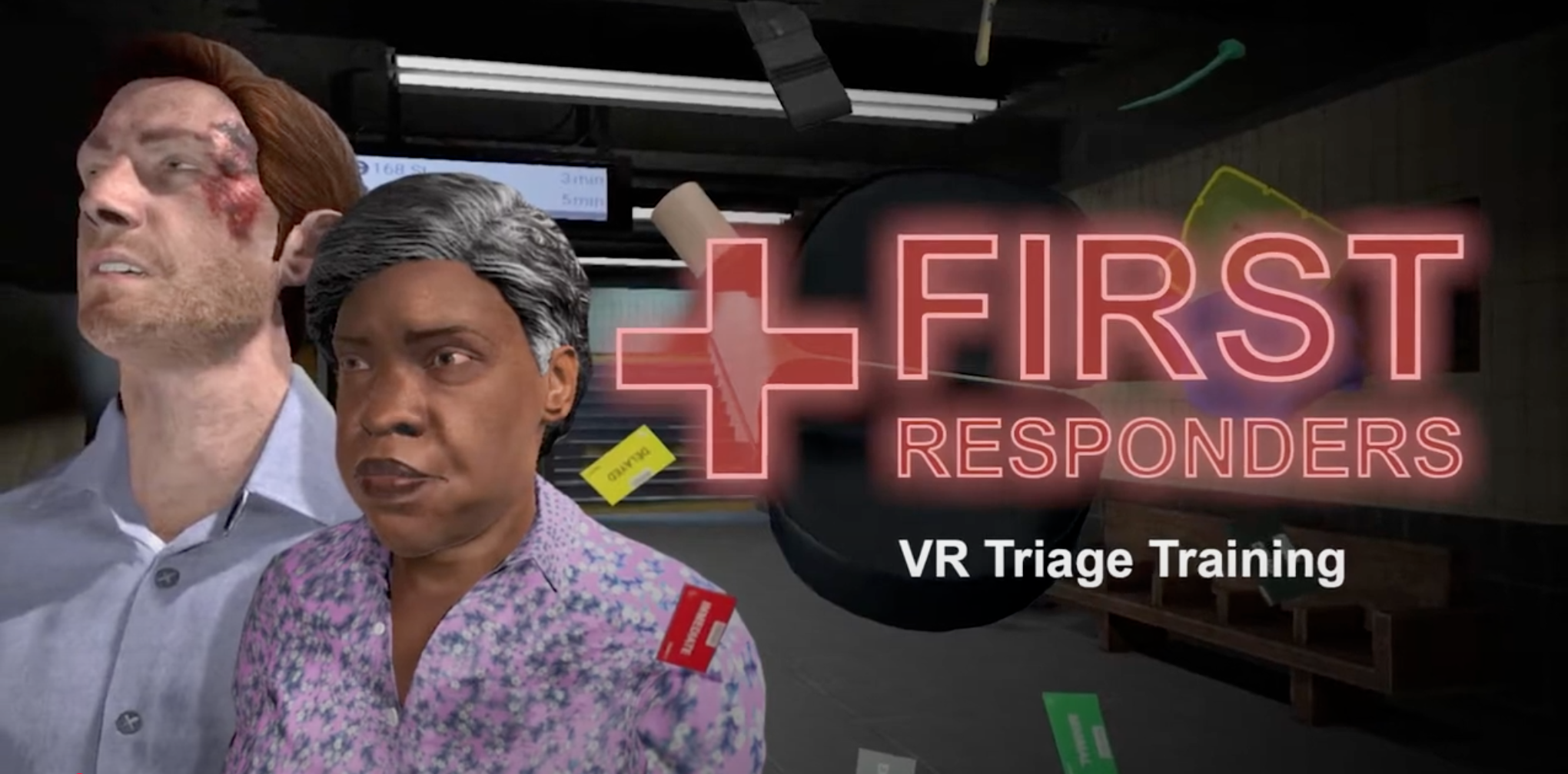
First Responders VR Triage Training
OSU, ACCAD & OSU Medical Center, VR Simulation
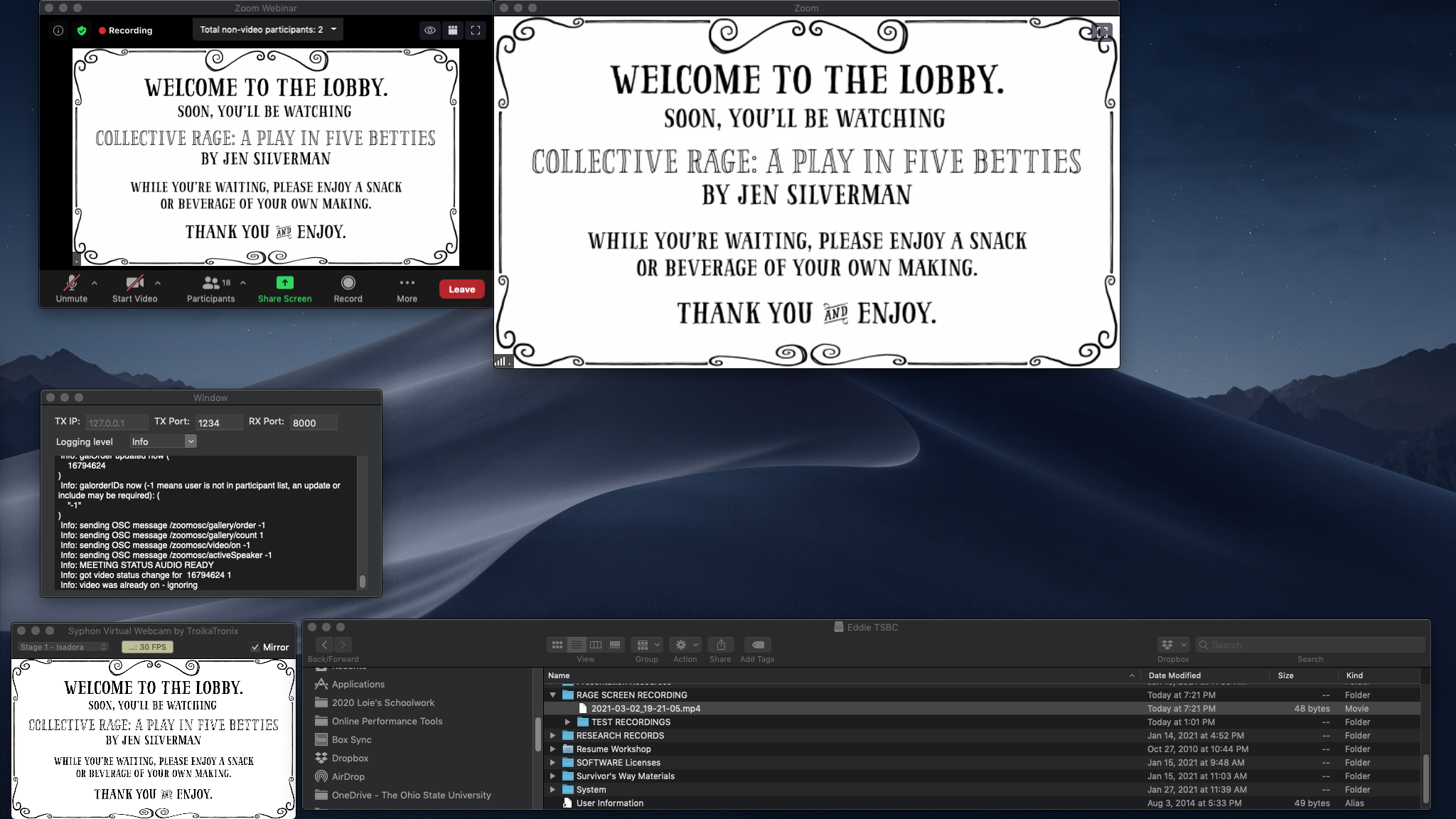
Collective Rage
OSU, Department of TFMA | Online Performance
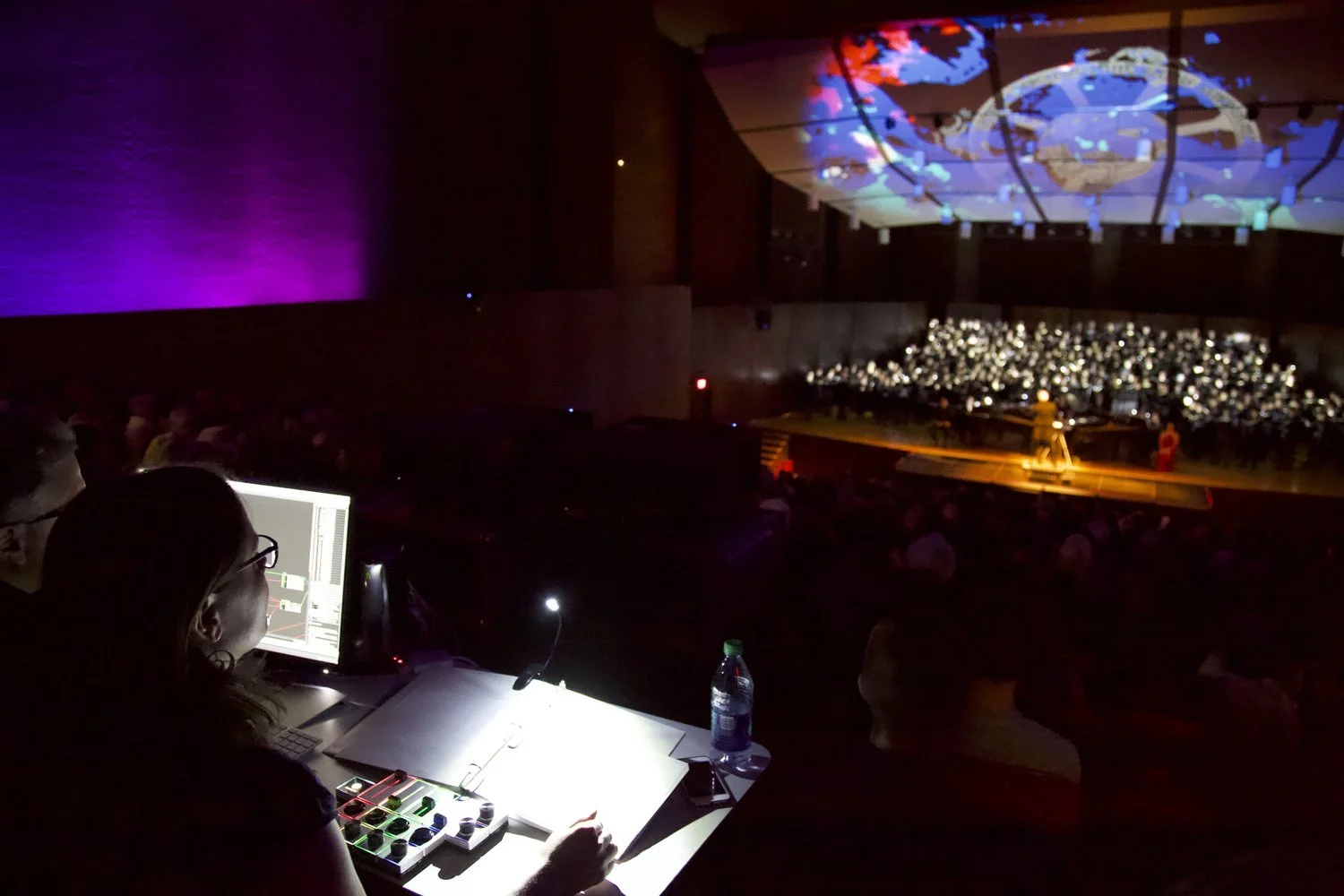
Carmina Burana
OSU, School of Music, Weigel Hall
Teaching Statement
Whether teaching Fundamentals of Media Design, Introduction to Theatre, or Devising Experiential Media Systems (DEMS), I cultivate learning environments where students can take intellectual and creative risks. My classes emphasize learning through iteration and critical engagement with the core technologies and workflows that shape professional theatrical media design practice. I also emphasize the connections between theatre, dance, film, performance, healthcare, and other disciplines.
Grounded Teaching, Flexible Structures
My pedagogical approach is grounded in reverse course design, Bloom’s Taxonomy, scaffolded learning, and small teaching with an emphasis on graceful rigor: the idea that high expectations can and should coexist with empathy, flexibility, and trust in students’ capacity to grow and adapt.
I design each course I teach starting from clear, measurable learning outcomes. I then scaffold learning through sequenced experiences balancing technical instruction, critical theory analysis, creative experimentation, and collaborative open community problem-solving. I align assignments and assessments to target creating moments of student-demonstrated understanding through the praxis driven creation of original media experiences explored directly in context of real-world applications.
How DEMS Exemplifies This Approach
The DEMS course, which I have taught and evolved since 2015, exemplifies this approach. Students move through three iterative “cycles,” each one scaffolded to deepen their understanding of interactive media design through hands-on experimentation, critical reflection, and peer feedback. Early cycles emphasize exploration of how sensors work, how projection interacts with bodies and how sound and image shape perception. Later cycles focus on integration and intentionality, asking students to consider audience experience, technical coherence, and the narrative or conceptual arc of their work. Many projects evolve into fully realized interactive installations or performances that blend disciplines.
This project-based, iterative structure invites students to take creative risks and fail productively. I support this by building a culture of open iteration where feedback is frequent, failure is normalized as part of the process, and deadlines flex in service of meaningful growth and research. I work individually with students who encounter personal, technical, or conceptual setbacks. As a teacher and mentor I help them recalibrate their research goals without compromising the course’s learning outcomes. This practice of holding room and flexibility for “student grace” is a recognition that rigor and compassion are partners in deep and advanced learning.
My courses integrate peer review, reflective writing, chosen readings, and student led class presentations, reinforcing that learning is both internal and relational to the classroom. My students learn to talk about their work, revise in response to critique, guide through the use of critique, and situate their practice within larger multidisciplinary, cultural, artistic, and technological conversations.
As a teacher I seek to balance my students’ structured progression with creative freedom. Students are encouraged to bring their own disciplines, identities, and experiences into their work. My classrooms are interdisciplinary by design: dancers build projection systems, designers stage immersive narratives, engineers craft sensory sculptures. I build learning communities where we work together to inform each other’s practice
Mentorship Across Disciplines
Over the past decade, I have served as a thesis chair or committee member for MFA, PhD, and DMA students across Theatre, Dance, Art, Design, and Music. These students have explored everything from interactive performance and immersive installations to computational scenography and somatic media systems. Many have gone on to pursue advanced work in media design, teach in higher education, or contribute to professional fields ranging from theatrical production and museum exhibition to experience design and creative technology.
As a Professor of Media Design and Installation, I continually evolve my pedagogy in response to emerging technologies, shifting student needs, and changes within the field. At the heart of my teaching philosophy, however, is a consistent commitment: to design and facilitate excellent learning experiences where students are challenged, supported, and empowered. Through structured, research-informed approaches and as part of graceful rigor, I aim to help students achieve meaningful outcomes in their education, creative research, and lives.
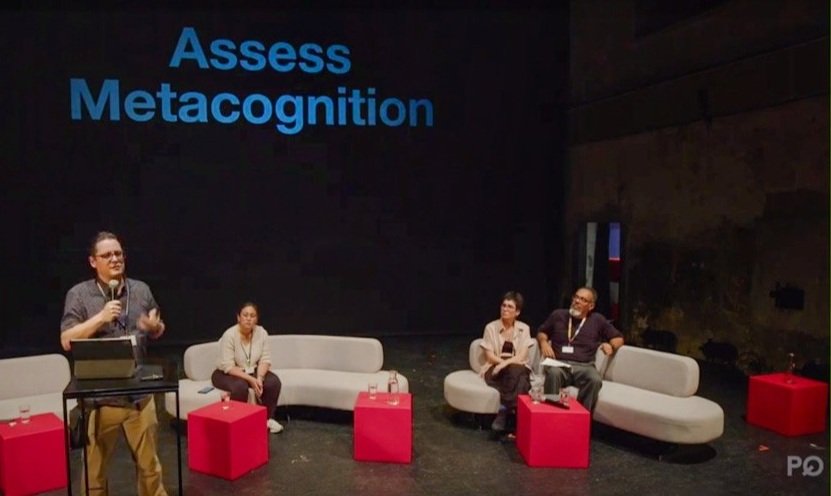
Alex presenting at PQ Talks in 2024 on “Pedagogical Strategies in Response to the Global Pandemic.”
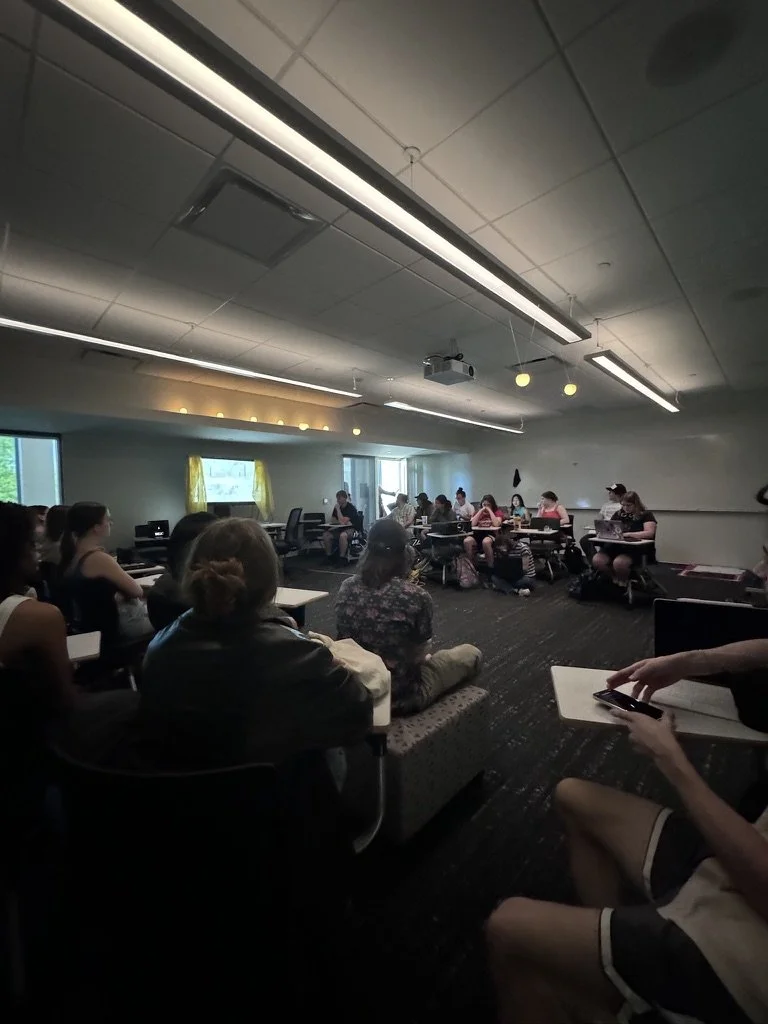
Student presentation of work.
Intro to Production Design, Department of TFMA.
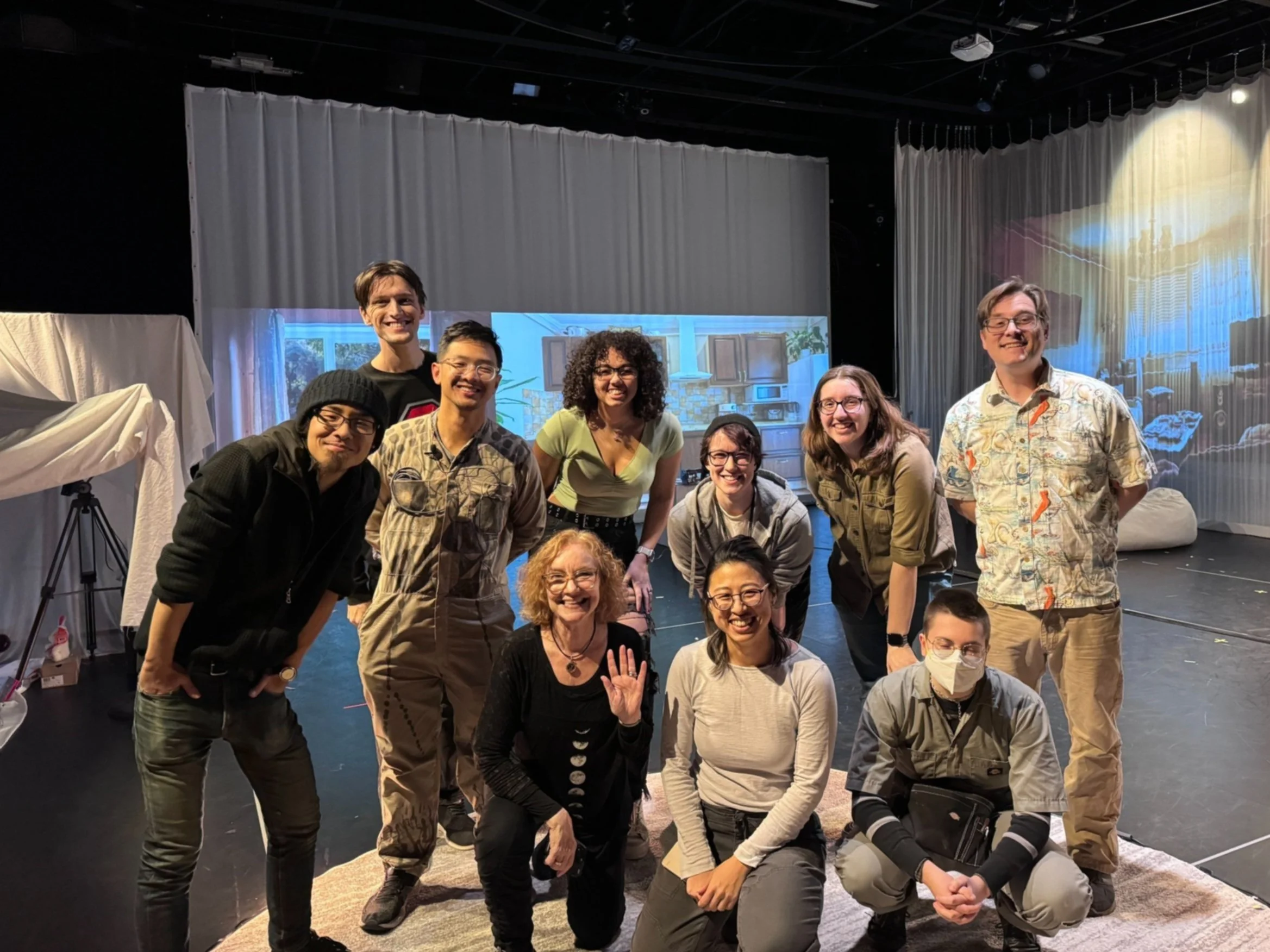
Alex (on the far right) with students from his course Devising Experiential Media Systems in 2024.
Student Work as Pedagogical Evidence
Since 2015, I have designed and taught DEMS, a cross-disciplinary, project-based course housed at ACCAD. The course centers on iterative, student-driven exploration of interactive media systems across performance, installation, and responsive environments. It emphasizes scaffolded praxis based learning, and creative risk-taking grounded in embodied and human centered design. My classrooms are sites of disciplinary innovation, where practice and pedagogy co-develop. My teaching moves students from exploration to integration, often across boundaries of art, performance, computing, and meaning making.
The DEMS website is living archive of student work and pedagogical evolution, documenting nearly a decade of outcomes across disciplines. It provides concrete, public-facing evidence of the efficacy of my course design, especially alignment of learning outcomes with assessment strategies, as well as scaffolded learning and embedded reflective practices. Students post their primary assignments to the site, giving incoming students access to a rich, researchable history that inspires them to contribute and build up on the work of past cohorts.
From 2015 to 2025, students in DEMS have represented a wide range of disciplines, including:
Theatre (Acting, Directing, Scenic Design, Lighting Design, Sound Design, Costume Design, Media Design)
Dance (Performance, Choreography, Dance Studies)
Music (Composition, Performance, Music Technology)
Art (Art & Technology, Fine Arts, Sculpture, Digital Art)
Creative Writing (Interactive Fiction, Narrative Experimentation)
Design (Visual Communication Design, Industrial Design, Game Design, Digital Art & Interactive Media, Experiential Media Design)
Architecture
Computer Science (Software Engineering, Game Programming)
Film & Media (Film/Video Production, Immersive Media)
Humanities (Comparative Studies, English/Literature, Communications, Education)
Business (Marketing)
Taken as a whole, the DEMS website is more than a showcase, it is a sustained record of how my students learn, experiment, and grow. It shows that I exhibit teaching excellence. This longitudinal record demonstrates my leadership as a teacher, mentor, and field-builder.
Alex Oliszewski
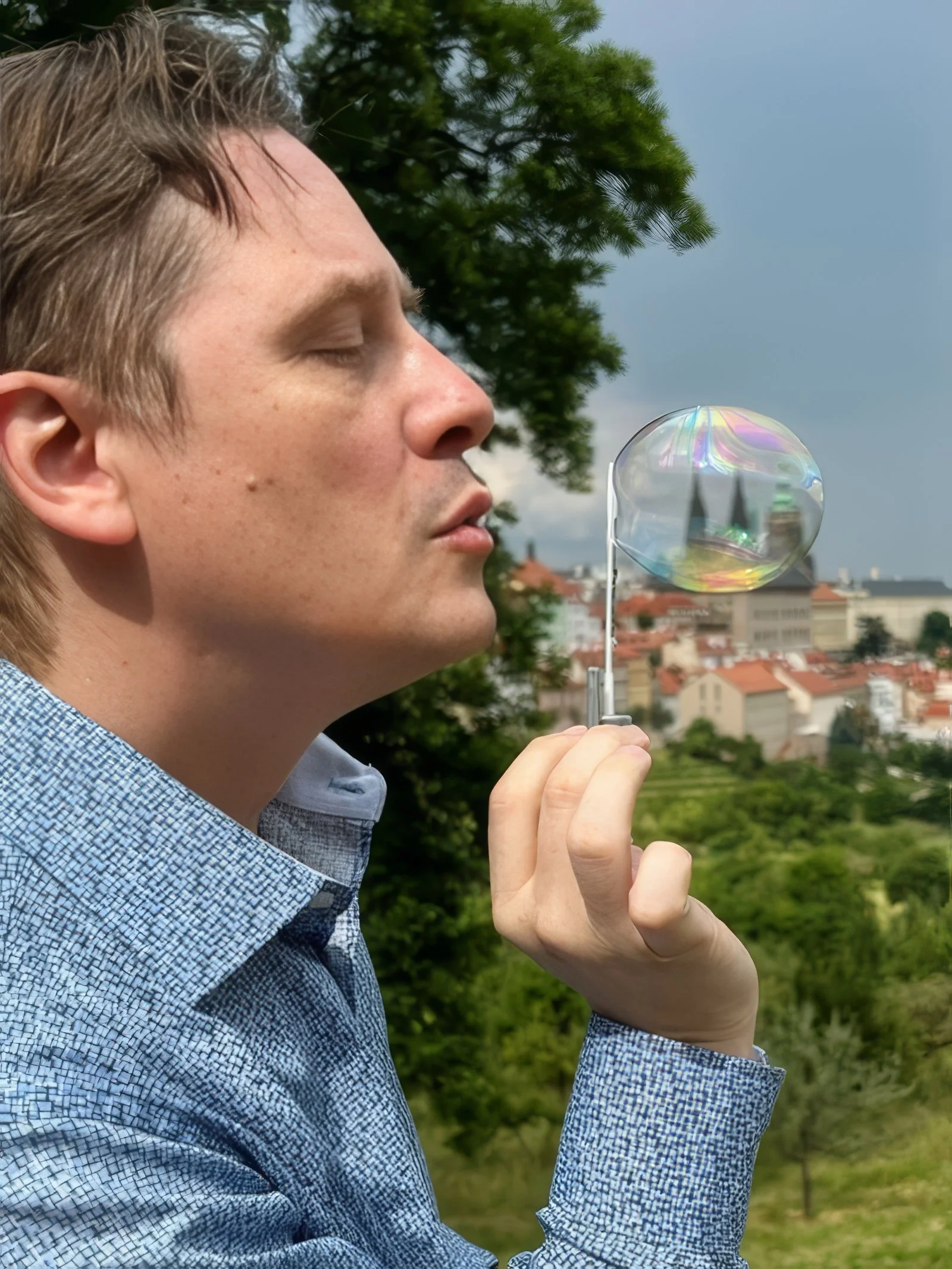
Curriculum Vitae (PDF download)
Professor of Media Design
The Ohio State University
Jointly Appointed Between:
Tenure Initiating Unit: Department of Theatre, Film, and Media Arts
The Advanced Computing Center for the Arts and Design
Affiliated Faculty
The Department of Dance
Administrative Roles
Director of Undergraduate Studies for TFMA
Design Tech Area Committee for TFMA
Motion Lab Committee for ACCAD
Department of TFMA Courses Taught
Fundamentals of Media Design
Intro to Production Design
Intro to Theatre
Studio Praxis
ACCAD Courses Taught
Devising Experiential Media Systems
Performance and Storytelling in VR
Digital and Physical Lighting
and others . . .